
Shedding light on “dark taxa”:
Chemical communication among Myriapods
Research on animal communication is taxonomically biased, with a strong focus on a few well-studied groups of vertebrates and arthropods. This project aims to close this knowledge gap by investigating chemical signaling—the most ancient and widespread sensory modality—in a representative of an understudied phylum, the Myriapoda. While hints exist for pheromone use in centipedes, such as sexually dimorphic glands, their function remains empirically untested.
Using the house centipede, Scutigera coleoptrata, as our model, this project addresses foundational questions about its sensory ecology. We will investigate:
Do these predators use chemical smell or taste to locate prey? Do they use pheromones to find mates?
Which sex is responsible for initiating the search for a partner?
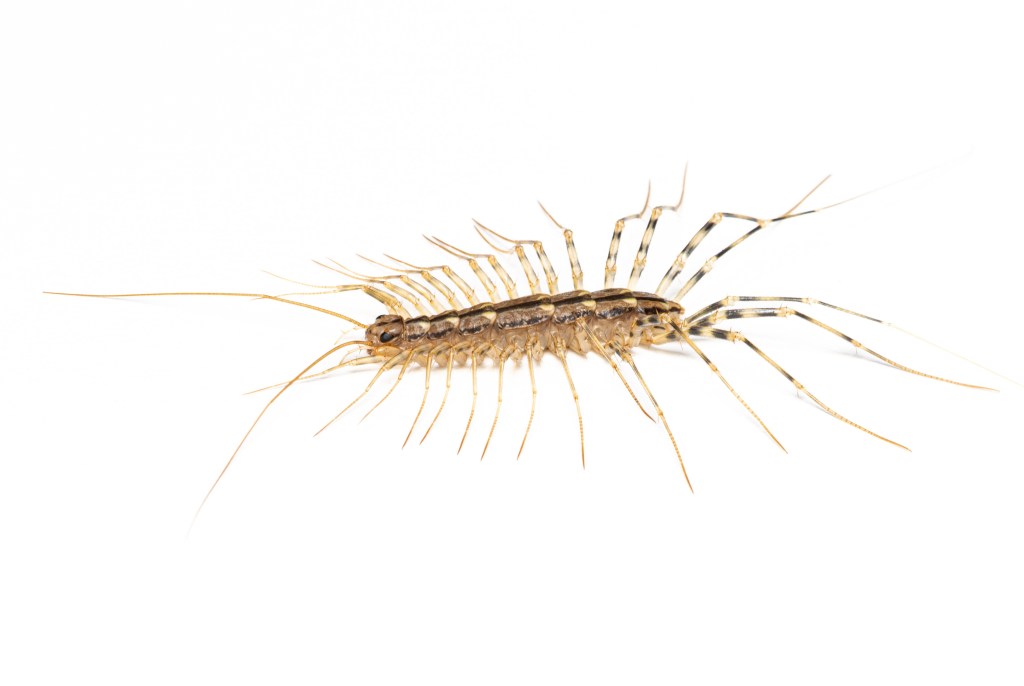
Our approach will employ behavioral choice assays to systematically test for responses to chemical cues derived from prey and conspecifics of both sexes. This foundational work will establish whether chemical communication is a key driver of behavior in this group. Metabolomic based analyses will follow any promising behavioral findings.
We are seeking inquisitive students (BSc, MSc) to join this exploratory project and contribute to the fundamental understanding of a „dark taxon“.
 Animal Metabolomics & Ecology